The $200K–$250K Sweet Spot: Why That Price Band Moves Fastest in Lancaster
If I list a clean three-bedroom ranch in Lancaster at $229,900 on a Thursday, I can tell you with some confidence what the weekend looks like: a full showing schedule, a few repeat visits on Sunday, and more than one offer to review Monday. If I list a nicer house at $319,900 the same Thursday, the weekend is quieter, the feedback is "beautiful, but," and we're having a conversation about price in three weeks. I'm Jeremy Fishnick, a Realtor and licensed home inspector who lives in Lancaster, and that pattern repeats so reliably that I think every seller and buyer here should understand why.
Short answer: In Lancaster, roughly $200,000 to $250,000 is where the most buyers can afford to shop, so that's where showings, offers, and competition concentrate. Above that band, the pool of qualified buyers shrinks fast, homes sit longer, and sellers have to be more precise on price and condition. It isn't that nicer homes don't sell; it's that fewer people can buy them, so they take more time and more skill.
Why the band exists
Price bands are really income bands. Lancaster is a county seat with a hospital, the courthouse, a school district, agriculture, and a mix of local businesses, plus a share of residents commuting to Platteville or Dubuque. The households formed around those jobs, two incomes in many cases, qualify for a mortgage payment that, at today's rates, lands a lot of them in the low-to-mid $200,000s for a purchase price. Add first-time buyers using WHEDA, FHA, USDA, or VA financing, and move-down retirees who want a one-level house and have a budget from selling a bigger one, and you've got the biggest concentration of ready buyers in town, all shopping the same shelf.
Above $250,000, the number of local households that can qualify drops off. The buyers who remain are real, but fewer: dual-professional couples, transferees, people bringing equity from a bigger market, move-up families. They're also pickier, because they have time.
What $200K-$250K buys in Lancaster
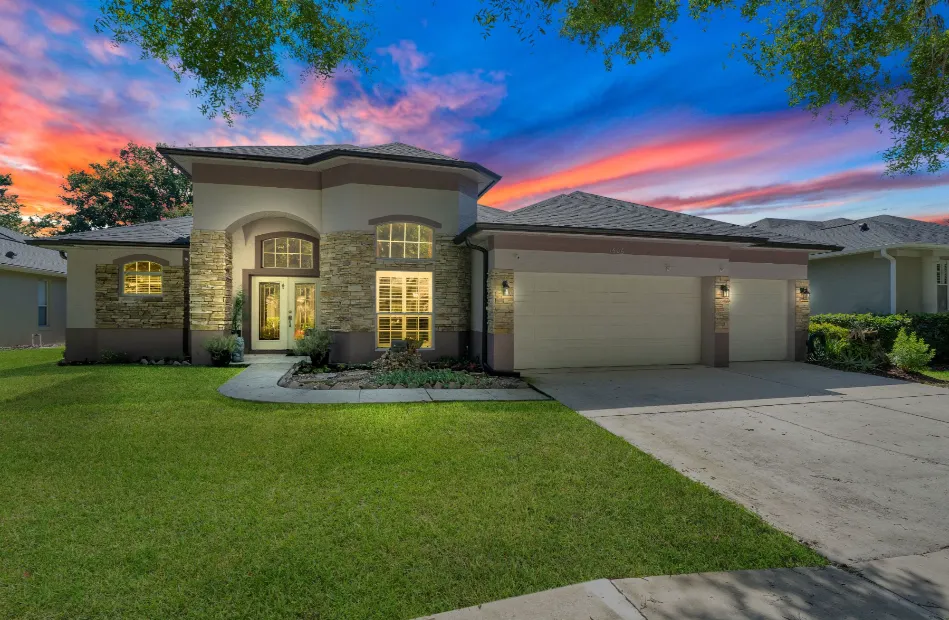
In broad strokes, this band is where the solid, unglamorous houses live: 1950s-through-1980s ranches with a basement and a garage, older two-stories near downtown that have been updated, and the occasional smaller newer home. Three bedrooms, one or two baths, a yard, a workable kitchen. Not perfect, but mechanically sound and ready to move into without a renovation loan.
That last part matters. Buyers in this band are payment-sensitive and cash-limited. They can handle paint and an eventual water heater. They cannot handle a roof, a furnace, and an electrical panel in year one, because their savings just went to the down payment. "Move-in ready" is the dividing line between the house that gets three offers and the house that gets none.
What happens above the band
Lancaster has nice homes above $250,000: larger ranches with finished basements, newer construction, updated historic homes, and acreage just outside town. They sell. But the experience is different:
- Fewer showings. The pool of qualified buyers is smaller, so the first weekend is slower by nature.
- Longer timelines. Buyers at this level aren't desperate, so they take their time and compare you to Platteville and Dubuque options too.
- Less forgiveness on price. At $229,900, being 5 percent too high still gets you offers; the competition pulls the price up. At $319,900, 5 percent too high means silence.
- Appraisal pressure. With fewer comparable sales at higher prices, appraisers have less to work with, and a contract that pushes the top of the market can run into an appraisal gap.
- Condition expectations go up. Buyers paying more expect more. The dated kitchen that's acceptable at $220,000 becomes an objection at $300,000.
How I price inside the band
For a house that belongs in the sweet spot, my approach is to price it like an appraiser would, off real comparable sales, and often slightly under where I think it will end up. That sounds backward to some sellers until they see it work. Pricing a little attractive pulls the whole buyer pool through the door on the first weekend, and competition among those buyers does the rest. I've written about pricing a home to create competition in more detail; the short version is that in a thin-inventory town, the buyers set the ceiling, not the list price.
The launch matters as much as the number. I list on Thursday, run showings Friday through Sunday, and review offers Monday, with postcards to the neighborhood, a 3D walkthrough, and photos I shoot myself. In the sweet spot, that regularly produces multiple offers, which is how a seller gets a clean contract at a strong price.
How I price above the band
Above $250,000, the create-competition approach still works, but the margin for error is smaller. There may only be a handful of truly qualified buyers in a given month, so the goal is to be the obvious choice when they're ready, not to wait for a bidding war that may not materialize. That means:
- Pricing precisely off the few relevant comps, including Platteville sales when Lancaster doesn't have enough data.
- Handling condition before launch. A pre-listing inspection and a short fix list so nothing in the report gives a careful buyer a reason to hesitate. My post on what to fix before selling covers the usual suspects.
- Marketing to a wider radius. Dubuque, Platteville, and Madison buyers, not just the Lancaster neighborhood.
- Patience, with a plan. We set checkpoints in advance so a price adjustment, if needed, is a decision and not a panic.
My Sold For Top Dollar Guarantee applies either way: if the home doesn't sell at the original agreed list price, I pay the difference, up to 1 percent of that list price, out of my commission. That's a reason for me to be careful about the number we agree on, in both bands.
What this means if you're buying
If your budget is in the sweet spot, understand that you're competing with the most buyers in town. Get fully pre-approved, not just pre-qualified, before the right house hits. Be ready to see it the first weekend and decide by Sunday night. Don't waive the inspection, but go in knowing which items you'd actually walk over; I've written about winning a multiple-offer situation without overpaying, and that advice applies directly here.
If your budget is above the band, you have leverage. Fewer competitors means more time to inspect, negotiate repairs, and ask for terms. The house that's been sitting at $319,900 for six weeks has a seller who's ready to talk.
Lancaster's sweet spot is a sign of a healthy town: the people who work here can afford to buy here. Sellers who price and prepare well above $250,000 do fine, and they free up a sweet-spot house for the next family. For a broader look at the town itself, my living in Lancaster guide covers neighborhoods, schools, and daily life.
Talk to Jeremy
I'm Jeremy Fishnick with Fishnick Realty Advisors, a Realtor and licensed home inspector who lives and works in Lancaster. If you want to know where your house falls relative to the sweet spot, and what that means for how we'd price and launch it, call or text 608-732-2564. Sellers can learn about my guarantee and the six ways I can sell a home at fishnickrealty.com.


